How to Vet a Journalist Before You Pitch Them
To vet a journalist before pitching, read their last several published pieces to confirm the beat, check their corrections and credibility record, understand their outlet's standards and conflicts of interest, then personalize around what they actually cover. A precise pitch to the right reporter beats a blast to a hundred wrong ones, and it protects a relationship you will want again.
Why does vetting a journalist matter before you pitch?
Reporters are inundated, and the volume is getting worse: PR-industry surveys repeatedly find journalists receive dozens to hundreds of pitches a week and reject the overwhelming majority for irrelevance. Muck Rack's recurring State of Journalism surveys have found the large majority of reporters say most pitches they receive are not relevant to their beat. A mistargeted pitch is worse than no pitch, because it burns a relationship you cannot easily rebuild.
The signals you need are public: recent bylines, the outlet's standards, past corrections, and the reporter's own statements. Vetting is how you earn the right to their attention. As veteran editors put it, the fastest way to get ignored is to prove, in the first line, that you did not read them.
How do you confirm a reporter's beat and recent coverage?
Read their last five to ten pieces via the outlet and aggregators like Muck Rack. Beats drift, and a reporter who covered your space last year may have moved on. Note not just the topic but the angle they favor — data-driven, contrarian, human-interest — because personalization grounded in a specific recent piece is the single strongest predictor of a reply.
Recency is decisive. Pitching a topic a reporter has stopped covering signals you are working from a stale media list, which is exactly the impression that gets a sender filtered. The founders who earn coverage are the ones who can say, credibly, why this story is for this reporter this month.
How do you assess a reporter's credibility per use case?
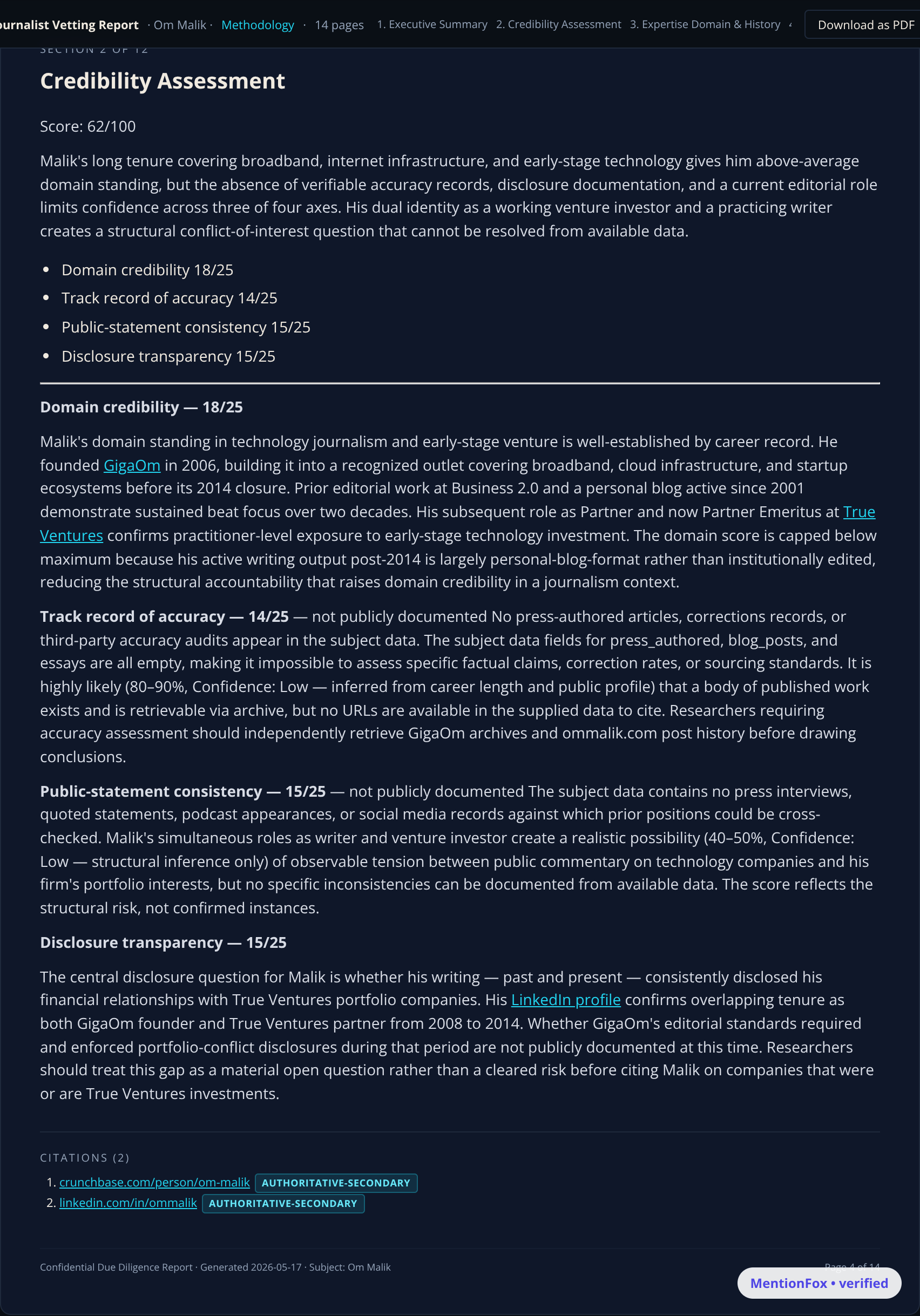
Credibility is per-use-case, not a single score. A reporter can be authoritative on policy and thin on technical detail, or vice versa. Map their demonstrated expertise domain: what they have covered deeply, where they have broken news, and where they rely on others' reporting. The match between your story and their genuine expertise is what determines whether the piece will be accurate and fair.
This is the section a dossier earns its keep on — assembling the reporter's coverage history, the topics they own, and the ones they touch lightly. The goal is not to grade the journalist but to place your story with the person most equipped to tell it well.
How do you read a corrections and accuracy record?
Check the reporter's corrections history and any public disputes. A transparent corrections record is a sign of standards, not weakness — outlets that hold to the SPJ Code of Ethics treat prompt correction as a duty. A pattern of unretracted errors or disputes the reporter never addressed is the caution to weigh.
Accuracy also depends on the outlet. Pew Research Center data has tracked the steady decline of local newsrooms and the pressure on remaining reporters to cover more with less, which raises the odds of a rushed piece. Knowing a reporter's constraints helps you supply the sourcing that makes their job — and your coverage — better.
What conflicts, affiliations, and outlet incentives should you check?
Look for disclosed conflicts, sponsorships, and affiliations that could color coverage of your category. A reporter with a standing relationship to a competitor is not off-limits, but you should know before you pitch. Outlet ownership and funding shape incentives, and Columbia Journalism Review has documented how ownership structures and sponsored-content arrangements can bend coverage.
Understanding the masthead tells you how your story will be framed and handled. A trade publication, a general-interest outlet, and a newsletter with a point of view will each treat the same facts differently — and matching your story to the right venue is as important as matching it to the right byline.
How do you find a reporter's contact ethically?
Use the outlet's staff or contact page and verified professional profiles. Never scrape a personal address; the wrong channel damages the relationship before it starts, and many reporters publicly list the exact way they want to be reached. Respecting that stated preference is itself a signal that you did your homework.
Ethical sourcing is also a deliverability issue. Pitches sent to guessed or scraped addresses bounce, get marked as spam, and poison your sending reputation. The correct contact is the one the reporter chose to publish — and it is almost always findable without guesswork.
How do you turn vetting into a pitch that lands?
Lead with the specific piece that shows you read them, connect your story to their demonstrated interest, and make the ask low-friction. Muck Rack's surveys consistently find that personalization and relevance are the top factors reporters cite for opening a pitch, and brevity is close behind. The pitch that lands could only have been written for this reporter.
Supply what makes their job easier: a clear news hook, verifiable facts, and a named human who can speak on the record. Reporters are not gatekeepers to be tricked; they are collaborators who reward the sender that hands them a real, well-sourced story.
How do you map a journalist's expertise domain over time?
A reporter's expertise is a moving target, and the trajectory matters as much as the current beat. Trace what they have covered over several years — the topics they own, the ones they have grown into, and the ones they have left behind. Muck Rack and outlet archives make this reconstruction straightforward, and it tells you whether the reporter is deepening in your space or drifting away from it.
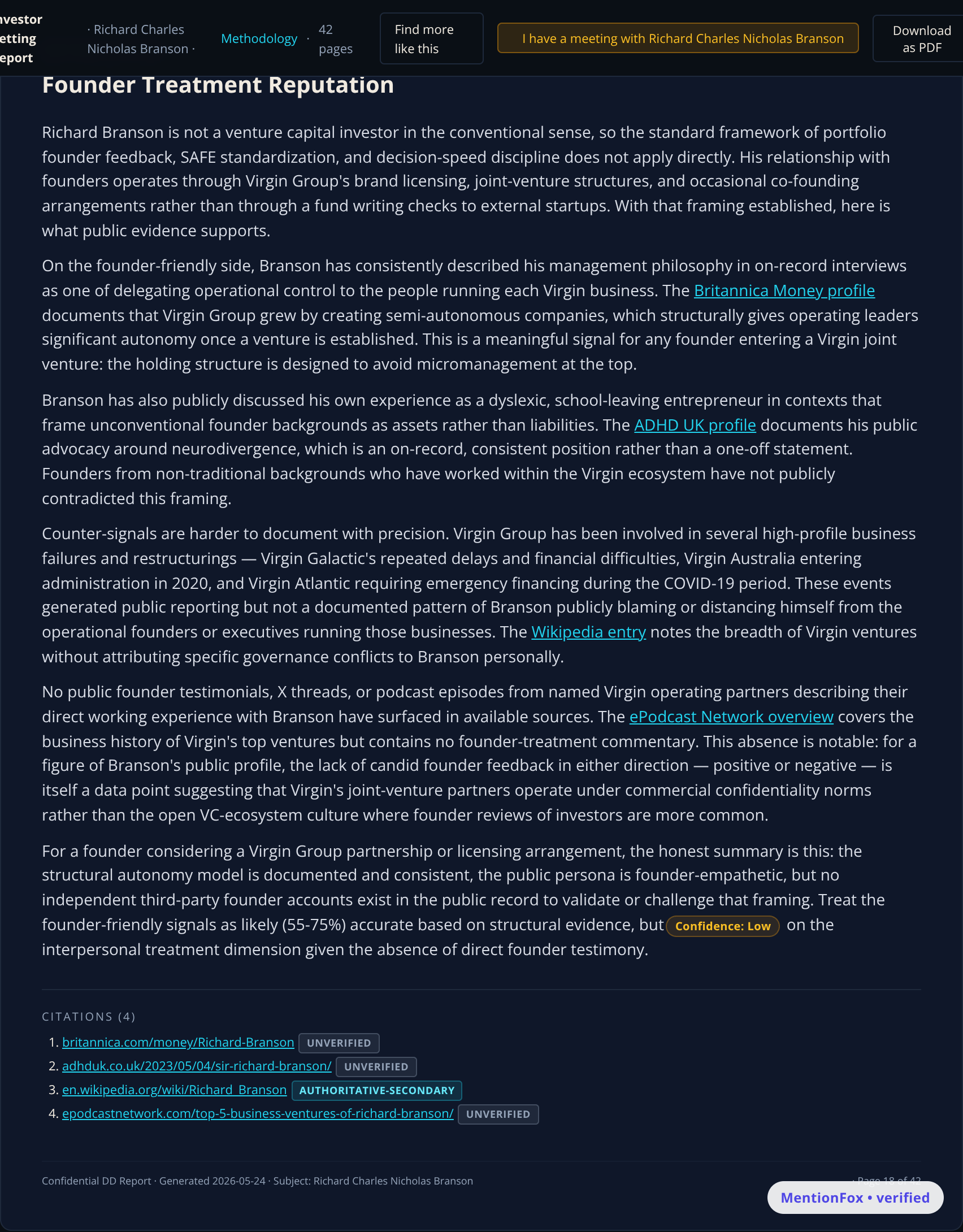
The expertise-over-time view also predicts receptiveness. A journalist actively building a beat is hungry for good sources in it; one winding down coverage is not. Matching your outreach to where a reporter is heading, not just where they have been, is what separates a well-timed pitch from a stale one.
How is press discovery changing with AI and search?
The discovery layer is shifting. Pew Research has documented the collapse of local newsrooms and the migration of audiences to search and, increasingly, AI assistants that summarize and cite a handful of sources. That means the reporter you pitch is also competing with an algorithm for the reader's first impression — and the sources those systems cite are shaped by what is publicly, verifiably documented.
For founders, the implication is dual: vet the reporter, but also make yourself the kind of source both journalists and AI systems can verify. A well-sourced public footprint — clear facts, attributable claims, a consistent record — is what earns a citation in a world where discovery is increasingly mediated by machines as well as editors.
What are the common failure modes in media outreach?
The recurring failures are predictable: pitching the wrong beat, mass-blasting a generic release, misstating a reporter's prior work, and following up too aggressively. Each burns credibility with a small, high-value audience. Muck Rack's surveys consistently rank irrelevance and lack of personalization as the top reasons pitches are ignored — meaning most failures are vetting failures, not writing ones.
The rarer, costlier failure is a factual error in the pitch itself. A reporter who catches you overstating a metric or misdescribing your own product will not just pass — they will discount everything you send afterward. Accuracy in the pitch is the price of admission to a relationship, not a nicety.
How do you build a target media list that respects reporters?
A good media list is short and vetted, not long and scraped. Rather than buying a database and blasting it, build a list of the handful of reporters who genuinely cover your space, each vetted for beat, recency, and fit. Muck Rack and outlet pages make this possible without guesswork, and a list of ten well-matched reporters outperforms a thousand random contacts every time.
Respect is a strategy, not a nicety. Reporters talk to each other, and a sender known for relevant, well-sourced pitches earns a reputation that opens doors; one known for spray-and-pray gets filtered across a whole beat. The vetted list is how you compound goodwill instead of burning it, and it is the difference between a press strategy and a nuisance.
How do you measure whether your outreach is working?
Press outreach is measurable if you track the right things: open and reply rates per reporter, the ratio of relevant to ignored pitches, and — the real metric — earned coverage that a reporter chose to write. Vanity counts like list size or pitches sent measure effort, not outcome, and they reward exactly the mass-blast behavior that erodes results.
Feed the results back into the vetting. A reporter who never replies despite a strong fit may have moved beats or left; one who engages warrants deeper investment. Treating outreach as a learning loop — vet, pitch, measure, refine — is what turns press from a lottery into a repeatable, compounding channel over time.
What does an honest journalist verdict look like?
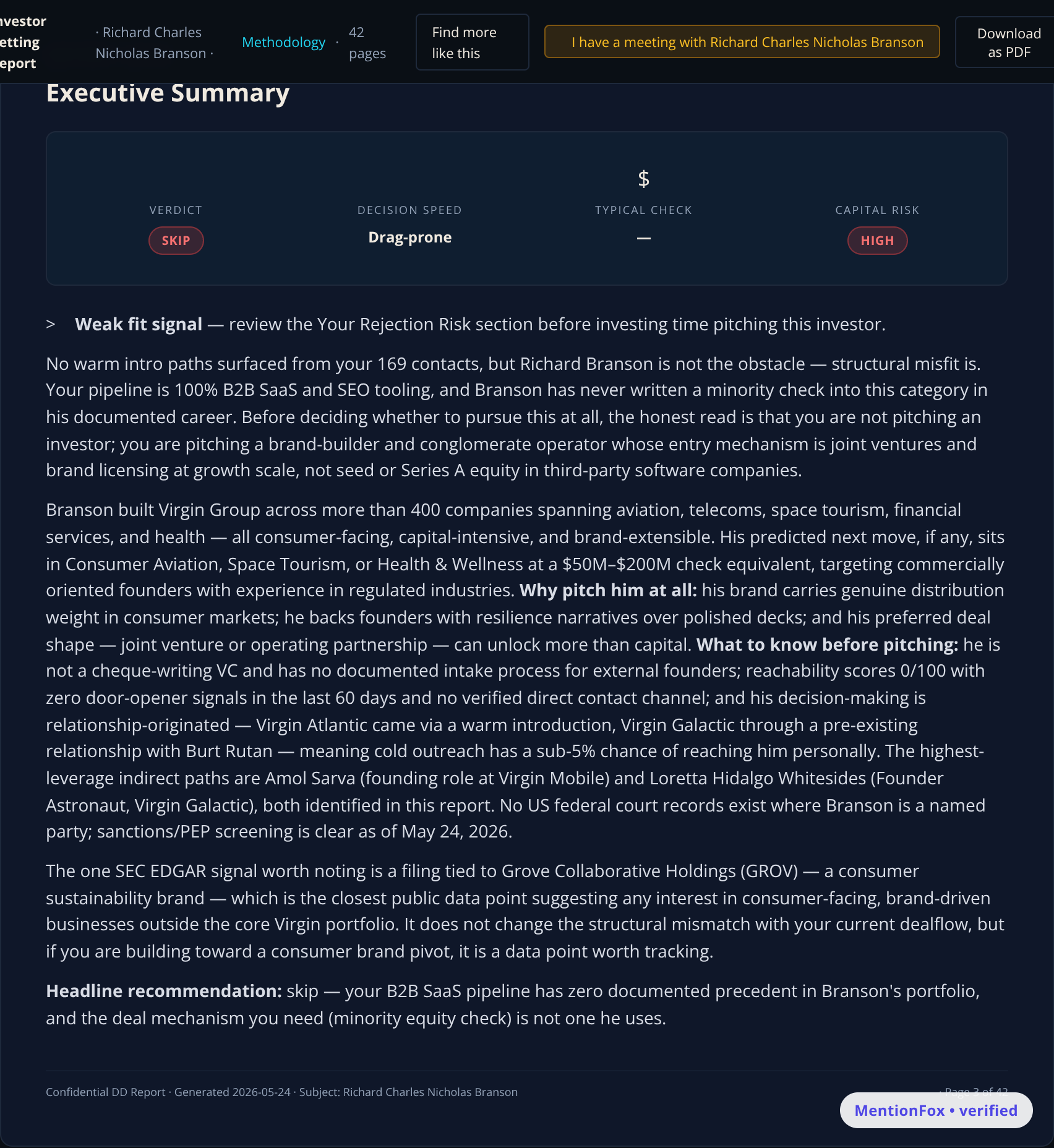
A useful journalist assessment ends in a per-use-case verdict: is this reporter a strong fit for this specific story, a weak one, or the wrong venue entirely. It names where the fit is thin — a beat mismatch, a conflict, an outlet whose framing works against you — because a report that only says "great fit" is a media-list entry, not diligence.
The verdict protects the scarcest asset in press outreach: your credibility with a small number of reporters who matter. Spend it on the pitches most likely to land, and you compound a relationship; spray it, and you burn the list.
Frequently asked questions
How many of a reporter's articles should I read before pitching?
At least the last five to ten. Beats drift, and pitching a topic they have stopped covering signals you did not actually read them — the fastest way to get filtered, according to reporters' own survey answers.
Is a reporter's corrections history a bad sign?
Not by itself. A transparent, corrected record reflects standards under codes like the SPJ Code of Ethics. A pattern of unretracted errors, or disputes the reporter never addressed, is the caution to weigh.
How do I find a journalist's contact ethically?
Use the outlet's staff or contact page and verified professional profiles, and respect any stated preferred channel. Never scrape a personal address — it damages the relationship and hurts deliverability by triggering spam filters.
Does the outlet matter as much as the reporter?
Yes. The publication's ethics standards, ownership, and funding shape how your story is framed and handled, so vet both the person and the masthead. The same facts land differently in a trade outlet, a general-interest paper, and an opinionated newsletter.
What do reporters say makes them open a pitch?
Personalization and relevance to their beat, followed by brevity, are the factors reporters most consistently cite in Muck Rack's State of Journalism surveys. A pitch that could only have been written for them is the one that gets opened.
What is credibility 'per use case'?
It means a reporter's authority varies by topic — strong on some beats, thin on others. Match your story to the reporter's genuine expertise domain so the resulting piece is accurate and fair, rather than pitching a big name outside their depth.
How big should my target media list be?
Short and vetted beats long and scraped. A list of ten reporters who genuinely cover your space, each vetted for beat, recency, and fit, outperforms a thousand random contacts — and it protects your reputation across a beat, since reporters talk to each other about who sends relevant pitches and who spams.
How do I know if my press outreach is working?
Track earned coverage a reporter chose to write, plus reply rates and the ratio of relevant to ignored pitches per reporter. Vanity metrics like list size or pitches sent measure effort, not outcome, and they reward the mass-blasting that erodes results. Treat outreach as a vet-pitch-measure-refine loop.
Sources & evidence
- Muck Rack — State of Journalism surveys, bylines and beats
- Society of Professional Journalists — Code of Ethics
- Poynter Institute — newsroom standards and media analysis
- Columbia Journalism Review — press criticism and ownership
- Pew Research Center — journalism and local-news data
- Nieman Journalism Lab — the business of news
MentionFox — Evidence-backed sales intelligence and due diligence engine.
Research a person, investor, founder, or firm before the meeting: verified public-record evidence, a one-page dossier, and every claim cited.
Try MentionFox free →Cite this guide
Referencing this paper? Copy the citation below. Every claim here is sourced, so it holds up.
Referenced this in your writing? Get featured →
Add the link to your piece. We verify that your page links back here, then queue it for review — no account needed. Approved reports appear in the Featured Field Reports on the matching hub.