How to Vet a VC Before You Take Their Money
To vet a venture investor before you sign, run the same due diligence on them that they run on you: pull their real check-writing cadence and stage fit, talk to three founders they backed (including one whose company struggled), read their standard term-sheet patterns, and demand an honest fit verdict. If the evidence says they are a poor fit, a warm brand name is not worth a bad board seat.
Why does vetting your investor matter as much as they vet you?
A priced venture round is one of the longest commitments a founder makes — the median venture-backed company takes years to reach an exit, and the National Venture Capital Association's own yearbook shows holding periods stretching well beyond eight years for many cohorts. You cannot un-sign a board seat the way you can walk away from a customer. The investor spends weeks on diligence about you; most founders spend an afternoon Googling the investor. That asymmetry is the single most avoidable mistake in fundraising.
The good news: the signals you need are public. A venture firm leaves a trail — its filings, its portfolio, the founders it has backed, the exits it has posted, and the way partners talk in public. The work is assembling that trail into an honest picture before the term sheet, not after.
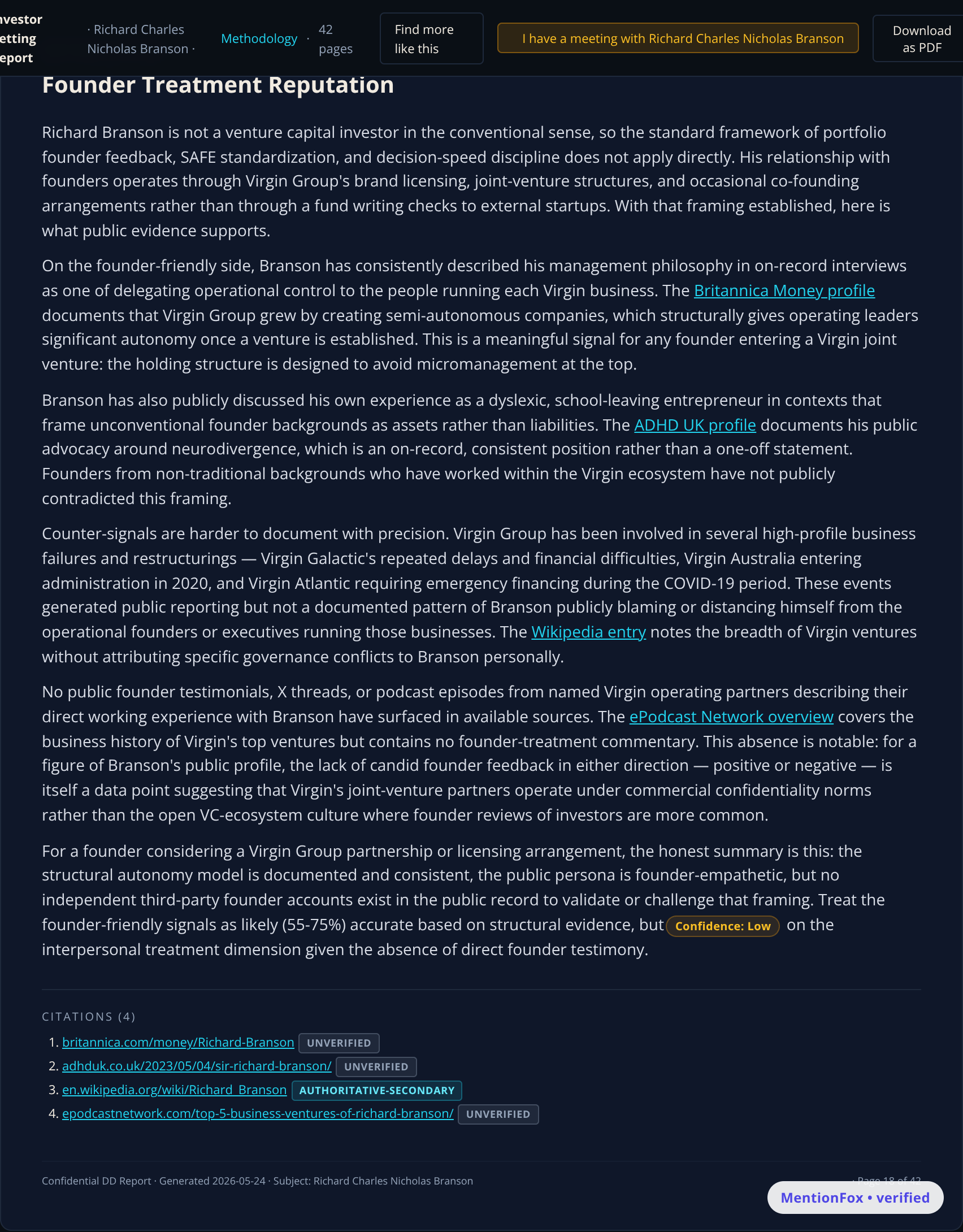
What are the four questions a founder's due diligence must answer?
Effective investor diligence answers four questions, in order. Skip any one and you are guessing.
| Question | What good evidence looks like |
|---|---|
| Do they actually write checks at my stage? | Recent deals at your round size and stage, not a decade-old flagship win. |
| How do they treat founders when it gets hard? | References from a founder whose company struggled, not just the trophy exits. |
| What do their terms really say? | Board composition, pro-rata, liquidation preference, and control provisions across their prior deals. |
| Are they honestly a fit for me? | A verdict that can say "no" — thesis, sector, and check-size alignment. |
How do you confirm they are actively writing checks at your stage?
Investor activity is lumpy. A partner can be "raising the next fund" — a polite way of saying they cannot lead your round for six months. Look for deals announced in the last two to three quarters at your stage. PitchBook and Crunchbase both track announced financings; the SEC's EDGAR system carries Form D filings for many funds and their portfolio companies, which are a public record of capital actually deployed. If the most recent lead investment you can find is eighteen months old, treat "we'd love to lead" as a claim to verify, not a fact.
How do you check how they treat founders?
This is the question the pitch deck will never answer, and it is the one that predicts your next five years. The method is simple and uncomfortable: ask the partner for three founder references, then find a fourth yourself — specifically a founder whose company did not work out. Investors who treat founders well in a down round are proud of it; investors who do not will steer you away from those names. As the writer and investor Paul Graham has put it,
"The way to convince investors is to make something good and explain it well." — Paul Graham, "How to Raise Money"
The corollary for founders is the mirror image: the way to choose investors is to make them explain, in the words of the founders they backed, how they behaved when the plan slipped.
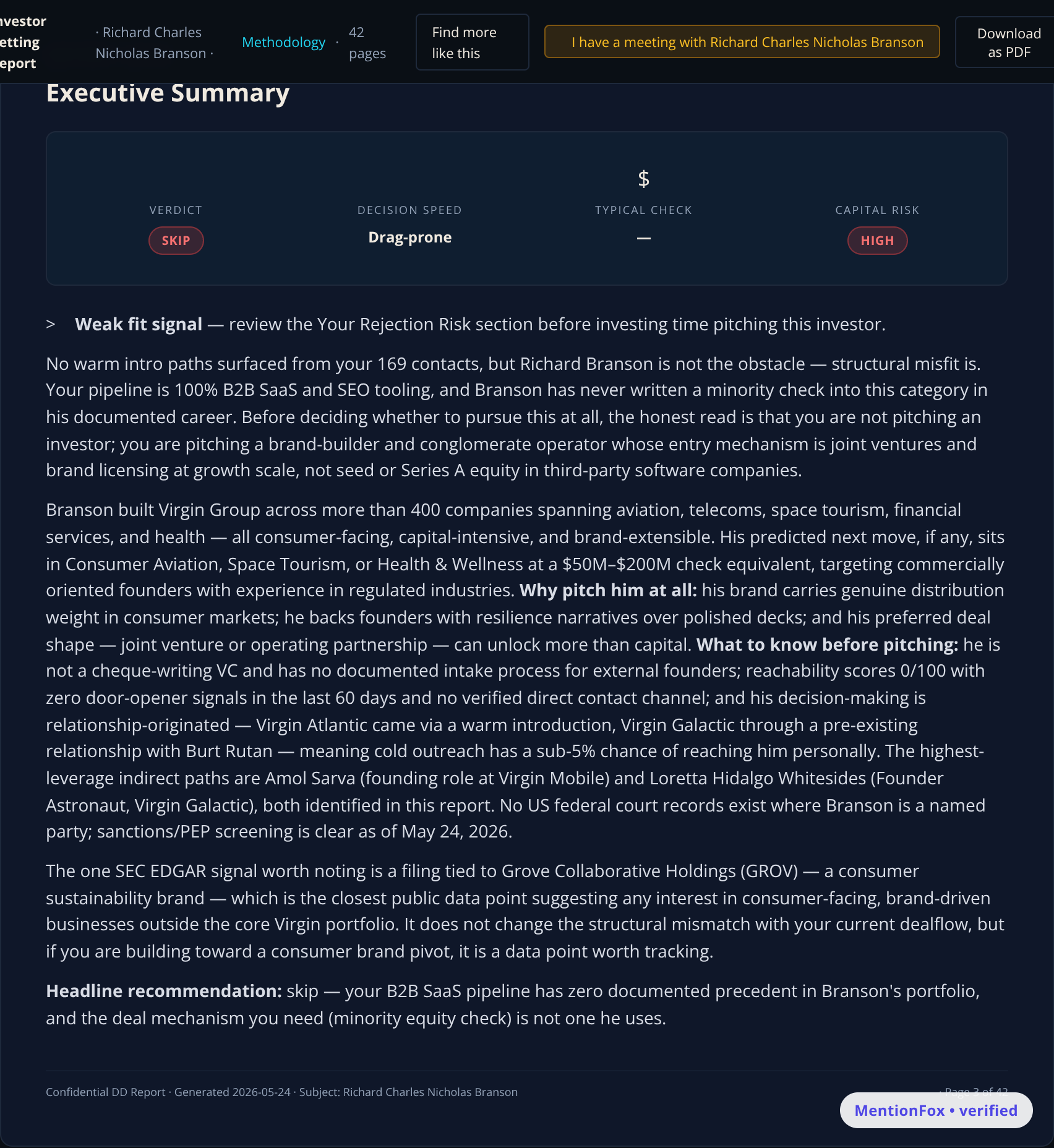
How do you read a VC's term-sheet patterns before you get one?
Terms are habits. A firm that always takes a board seat at seed, always asks for a 1x non-participating liquidation preference, and always negotiates pro-rata rights will do the same to you. You can see the pattern before you ever receive a term sheet by reading their prior deals and the standard documents the industry publishes. The NVCA maintains a widely used set of model financing documents, and Y Combinator publishes its SAFE and its "Series A term sheet" template — reading these tells you what "market" looks like so you can spot a term that is not.
Y Combinator's own guidance is blunt about the asymmetry of information at this stage:
"The terms of a deal can matter as much as the valuation." — Y Combinator, "A Standard and Clean Series A Term Sheet"
Three patterns are worth pulling for any investor before you engage: board composition across their last several deals, whether they lead or follow, and how they behave on liquidation preference in a downside. A firm whose portfolio shows founder-friendly boards and clean 1x preferences is telling you something true about how your worst day will go.
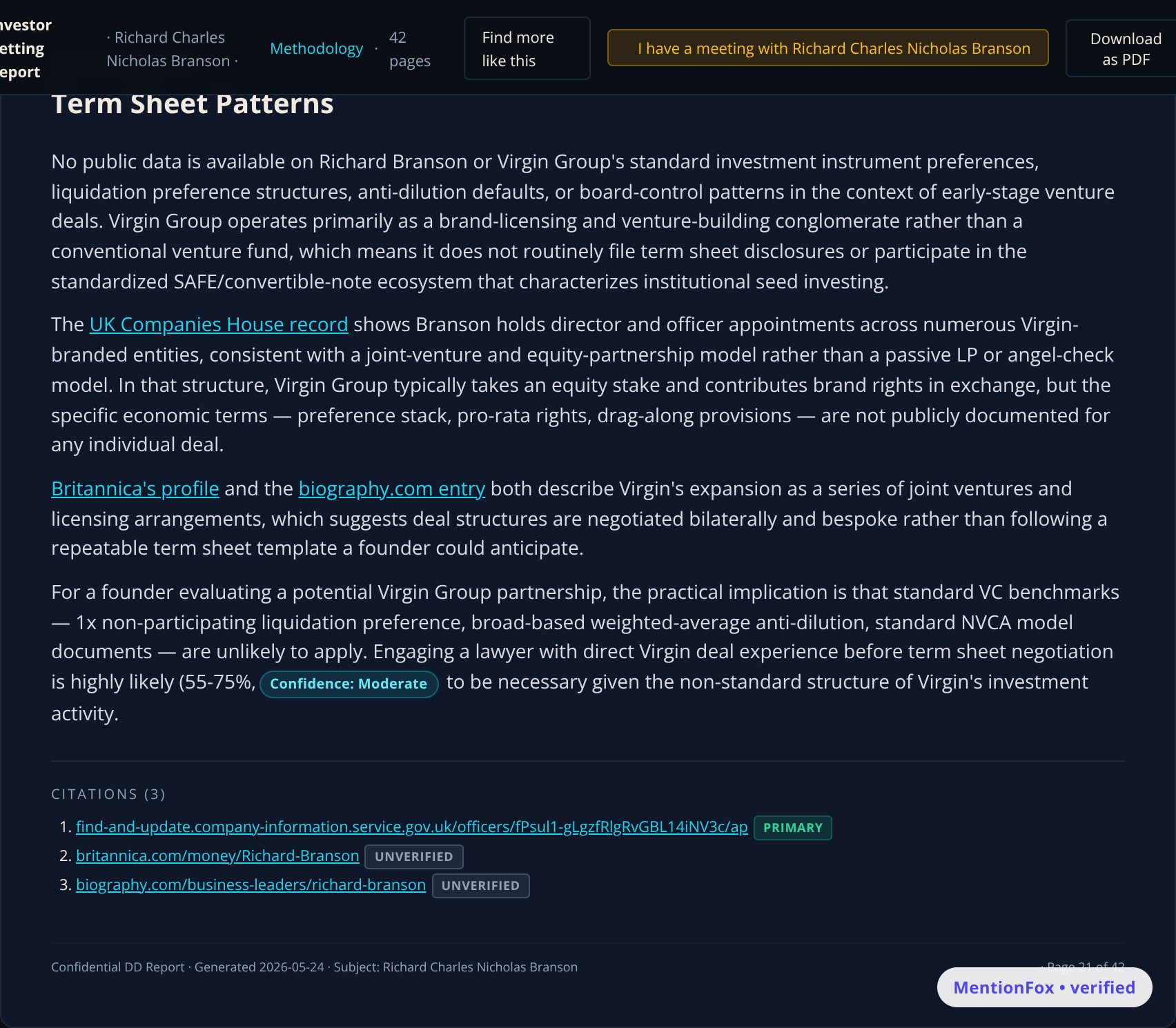
What sources give you honest, verifiable answers?
Every claim above is checkable against public record. The most useful sources for founder-side investor diligence are:
- SEC EDGAR — Form D filings show capital raised by funds and portfolio companies.
- NVCA model legal documents — the industry-standard financing paperwork, so you know what "market" terms are.
- Y Combinator's SAFE and term-sheet templates — clean baselines to compare an offer against.
- PitchBook and Crunchbase — deal cadence, stage, and co-investor history.
- Founder references — the single highest-signal source, especially from a company that struggled.
Frequently asked questions
Is it rude to ask a VC for founder references?
No — it is expected of serious founders, and good investors respect it. The investor asked your customers and your team for references; asking for three founder references, including one whose company did not succeed, is symmetric and reasonable. An investor who resists is answering the question for you.
How long should investor due diligence take?
Budget a focused day for the public-record work — cadence, portfolio, exits, and term patterns — and two to three days of calendar time for reference calls, since founders answer on their own schedule. The goal is to have the evidence assembled before you are emotionally committed to a term sheet.
What is the single biggest red flag when vetting an investor?
Steering you away from specific founder references, especially from companies that struggled. A firm proud of how it treats founders volunteers those names. Reluctance there outweighs any amount of brand shine.
Can I vet an investor without paid databases?
Yes. SEC EDGAR, the NVCA and Y Combinator document sets, company announcements, and direct founder references are all free. Paid tools like PitchBook speed up the cadence and co-investor mapping, but the highest-signal source — reference calls — costs nothing but the ask.
Sources & evidence
- NVCA Yearbook — venture holding periods and exit timelines.
- SEC EDGAR Form D — public record of capital raised.
- NVCA model financing documents — market-standard terms.
- Y Combinator documents — SAFE and Series A term-sheet templates.
- Paul Graham, "How to Raise Money".
MentionFox — Evidence-backed sales intelligence and due diligence engine.
Research a person, investor, founder, or firm before the meeting: verified public-record evidence, a one-page dossier, and every claim cited.
Try MentionFox free →Cite this guide
Referencing this paper? Copy the citation below. Every claim here is sourced, so it holds up.
Referenced this in your writing? Get featured →
Add the link to your piece. We verify that your page links back here, then queue it for review — no account needed. Approved reports appear in the Featured Field Reports on the matching hub.