Is YC Worth It? How to Vet an Accelerator Before You Apply
To vet an accelerator, weigh its real track record and graduate outcomes against the equity and terms it takes, confirm you fit its acceptance profile and stage, and pressure-test the mentor network with alumni. A brand-name accelerator is worth real equity only if its network and outcomes move your specific company — for many founders at many stages, the honest answer is no.
Why vet an accelerator instead of just applying?
An accelerator is a priced trade: equity and time for capital, network, and a demo day. Programs vary enormously in what they deliver, and the equity you give up is permanent — a few points at the earliest stage can be worth a great deal by exit. Vetting before you apply is how you avoid paying a premium for a logo that does little for your stage.
The evidence is public: portfolio outcomes, published terms, alumni testimony, and acceptance patterns. Y Combinator alone has funded thousands of companies since 2005 and publishes an extensive alumni directory, which means the raw material for judging it — and its imitators — is unusually accessible. Assemble it before you spend weeks on an application.
How do you read an accelerator's real track record?
Look past the one or two breakout companies. Examine the broader cohort: how many graduates raised a subsequent round, and how many quietly folded. Crunchbase and PitchBook let you reconstruct graduation-to-Series-A rates rather than trusting the highlight reel, and academic work via the NBER has found that accelerator outcomes concentrate heavily in the top programs while median results are far more modest.
The base rate is sobering. Given that a large majority of venture-backed startups never return capital, even a strong accelerator's cohort will be mostly non-outcomes. Judge a program by whether it meaningfully shifts the odds for companies like yours — not by the survivorship-biased logos on its landing page.
What is an accelerator's acceptance profile, and do you fit it?
Top accelerators are highly selective — Y Combinator's acceptance rate has long been reported in the low single digits — which means the application itself is a real cost in founder time. Before you spend it, map the program's acceptance profile: the stages, sectors, and team shapes it actually funds, not the ones its marketing implies. Applying outside the profile is a low-probability lottery ticket.
Fit is not just about being good enough; it is about being the kind of company the program knows how to help. An accelerator built around consumer growth may add little to a deep-tech company with an 18-month research cycle, however strong that company is. The acceptance profile tells you whether your odds — and your upside — justify the application.
What terms and equity should you compare?
Standard-setters publish their deals: Y Combinator's standard deal and its SAFE templates are the benchmark most programs are measured against. Compare any program's equity ask, investment amount, and pro-rata rights against that baseline; a program taking more equity than YC must justify it with more delivered. Read the fine print on follow-on rights and MFN clauses — the terms shape your next round as much as the headline percentage.
As the YC guidance itself stresses, "the terms of a deal can matter as much as the valuation." An accelerator that takes a modest, standard stake and adds a genuine network is a different proposition from one that takes an outsized cut for a demo day and a Slack channel. The documents tell you which one you are dealing with.
How do you test the mentor network and alumni value?
The network is the product for most accelerators, and it is the hardest claim to verify from the outside. Talk to three alumni — including one whose company struggled — and ask concretely what the program did when things went wrong. As Paul Graham, YC's co-founder, has written, "What we tell founders is: don't worry about the product, worry about the users" — and a good program's network is measured by whether it actually connected founders to users, capital, and hires.
Ask what to look for in the mentor roster: active operators in your space who take real meetings, not a long list of names who take one call. A program's alumni will tell you, unprompted, whether the network is real — and their answers are worth more than any published testimonial.
What does a program look for, and what does it reject?
Every accelerator has a revealed preference — the team shapes, traction levels, and market types it repeatedly funds — and a set of things it reliably rejects. Reconstructing both from the portfolio tells you how to position, and whether to apply at all. A program that funds technical founding teams with early usage will read a solo non-technical founder differently, whatever the public criteria say.
Knowing the rejection pattern is as valuable as knowing the acceptance one. It saves you the weeks an out-of-profile application costs, and it tells you which of your weaknesses the program will fixate on — so you can address them before they read your application, or choose a better-matched program.
Is a top accelerator worth the equity for you?
For a first-time founder without a network, a strong program's introductions and credibility can be worth several points of equity — the signal alone opens doors that would otherwise stay shut. For a founder who already has investor access and traction, the same equity may buy little beyond a deadline. Fit and stage decide the answer, not the brand.
The honest verdict, like any good diligence, must be able to say "not for you." For many founders at many stages, the right call is to skip the program, keep the equity, and raise directly — and a vetting process that cannot reach that conclusion is not vetting; it is rationalization.
How do YC, Techstars, and Antler actually differ?
The major programs are not interchangeable. Y Combinator runs large batches with a standardized deal and an unusually deep alumni network; Techstars operates a mentor-driven, city-based model across many verticals; and Antler builds companies from individuals, often before a team or idea exists. Each implies a different stage, a different founder profile, and a different kind of value. Applying to all three with the same framing signals you have not read any of them.
The right question is not which program is best in the abstract, but which model matches where you are. A founder with a team and early traction fits a batch accelerator; a solo operator still assembling a co-founder may be a better fit for a company-builder model. The published structures tell you which door to knock on.
What is the true cost of an accelerator beyond equity?
Equity is the visible cost; time and focus are the hidden ones. A program demands months of intense participation during a period when the company most needs to build, and a demo-day cadence can pull a team toward fundraising theatre and away from customers. For some companies that forcing function is worth it; for others it is a distraction dressed as progress.
Weigh the opportunity cost honestly. The weeks spent on an application and a program are weeks not spent on product and users. As the NBER research on accelerators suggests, the programs that add value do so by genuinely compressing time-to-traction — so if a program cannot show it will accelerate your specific company, its cost is not just the equity but the momentum it displaces.
How do you position an application to the right program?
Once you have chosen a well-matched program, position deliberately to its revealed preferences. Lead with the evidence that program funds — traction for a batch accelerator, team and market insight for a company-builder — and pre-empt the weakness its rejection pattern fixates on. A vetting process that surfaced the acceptance and rejection profile hands you exactly the map an application needs.
Do not manufacture fit. If the honest read is that your company sits outside a program's profile, the disciplined move is to apply to a better-matched one, not to contort your story. Programs are good at spotting a stretched narrative, and a forced fit wastes the weeks the application costs on both sides.
How do you evaluate a demo day and its investor network?
Demo day is the payoff an accelerator sells, so evaluate it directly. Ask alumni what actually happened at theirs: how many quality investors attended, how many graduates raised on the strength of it, and how long the fundraising took afterward. A demo day packed with active check-writers is a real asset; one that is mostly press and analysts is theatre with a countdown clock.
The investor network behind the program matters more than the event itself. A strong accelerator maintains standing relationships with funds that reliably back its graduates, which is why PitchBook co-investment data around a program is worth pulling. If the same funds keep leading rounds for a program's alumni, the network is real; if graduates scatter to raise cold, the demo day is a stage, not a door.
What alternatives to an accelerator should you weigh?
An accelerator is one path, not the only one. Depending on stage and network, a founder might be better served by raising directly from angels, joining a founder community or fellowship, taking on a venture studio, or simply staying heads-down on customers. Each trades a different amount of equity and control for a different kind of help, and the honest comparison is against your best alternative, not against doing nothing.
Frame the decision as opportunity cost. If you can access capital and advice without surrendering equity to a program, the accelerator has to beat that baseline, not merely be useful. The founders who choose well treat the program as one option in a portfolio of ways to get capital and network — and often conclude, correctly, that keeping the equity is the better trade.
How do you turn accelerator diligence into a decision?
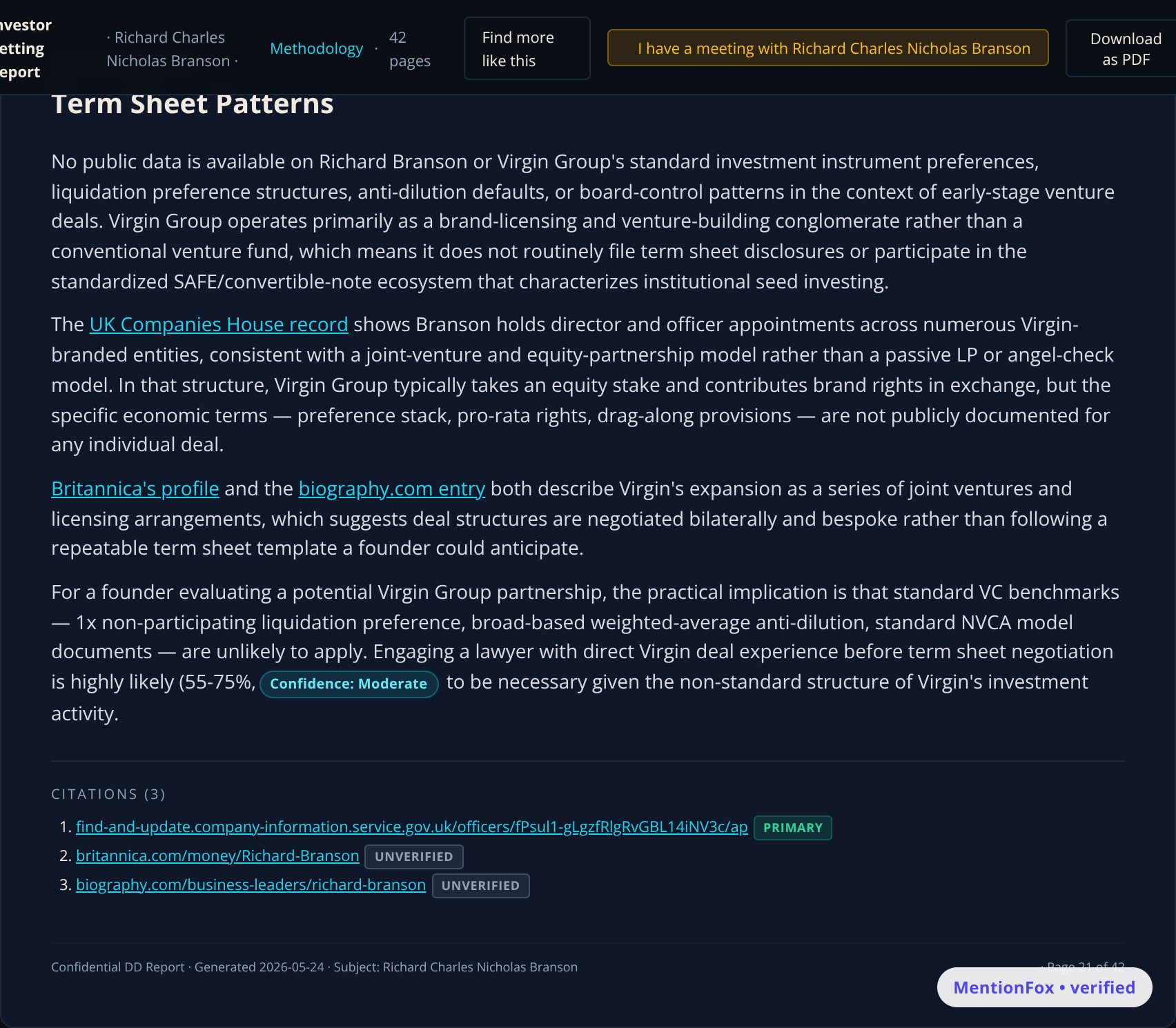
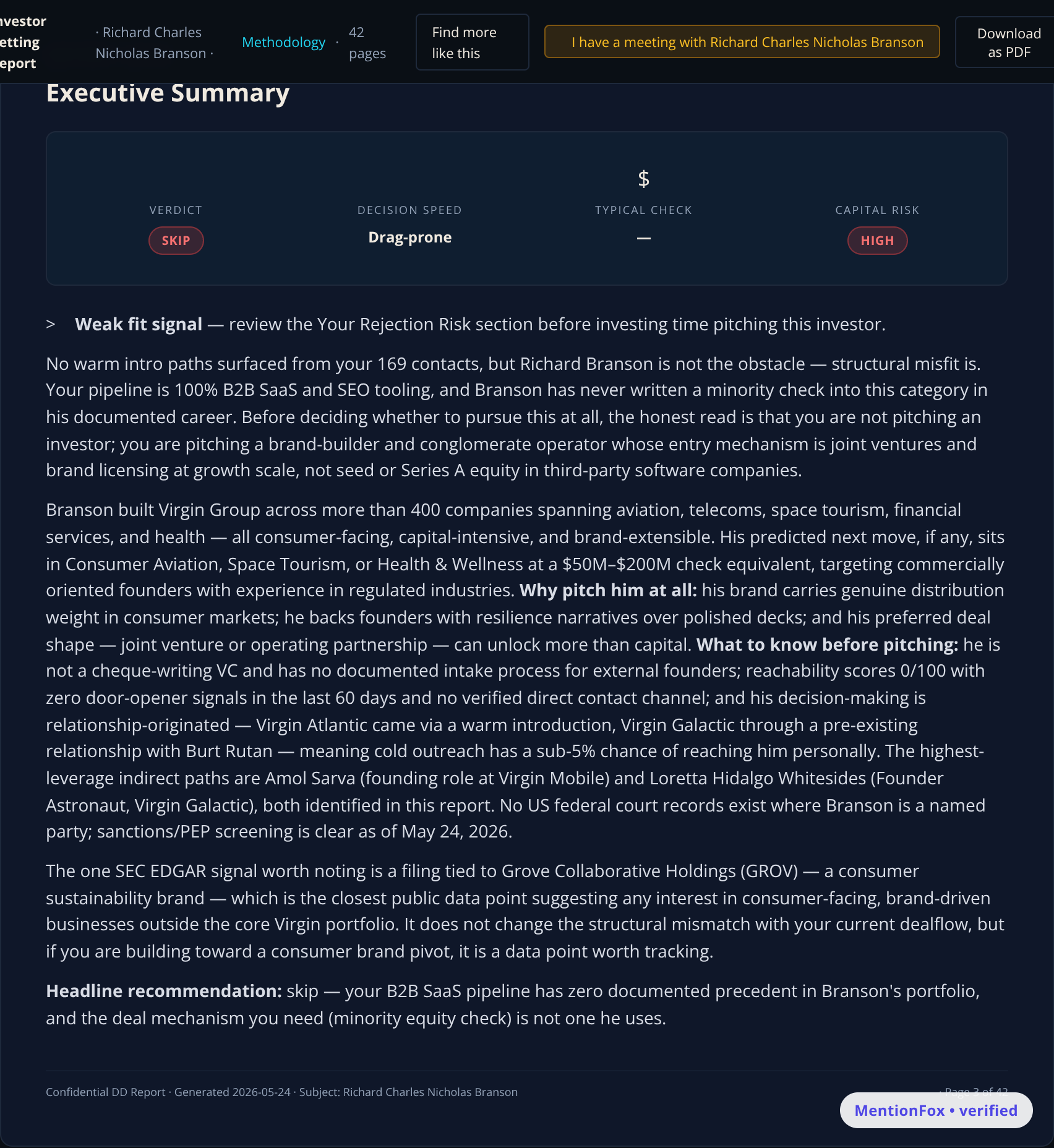
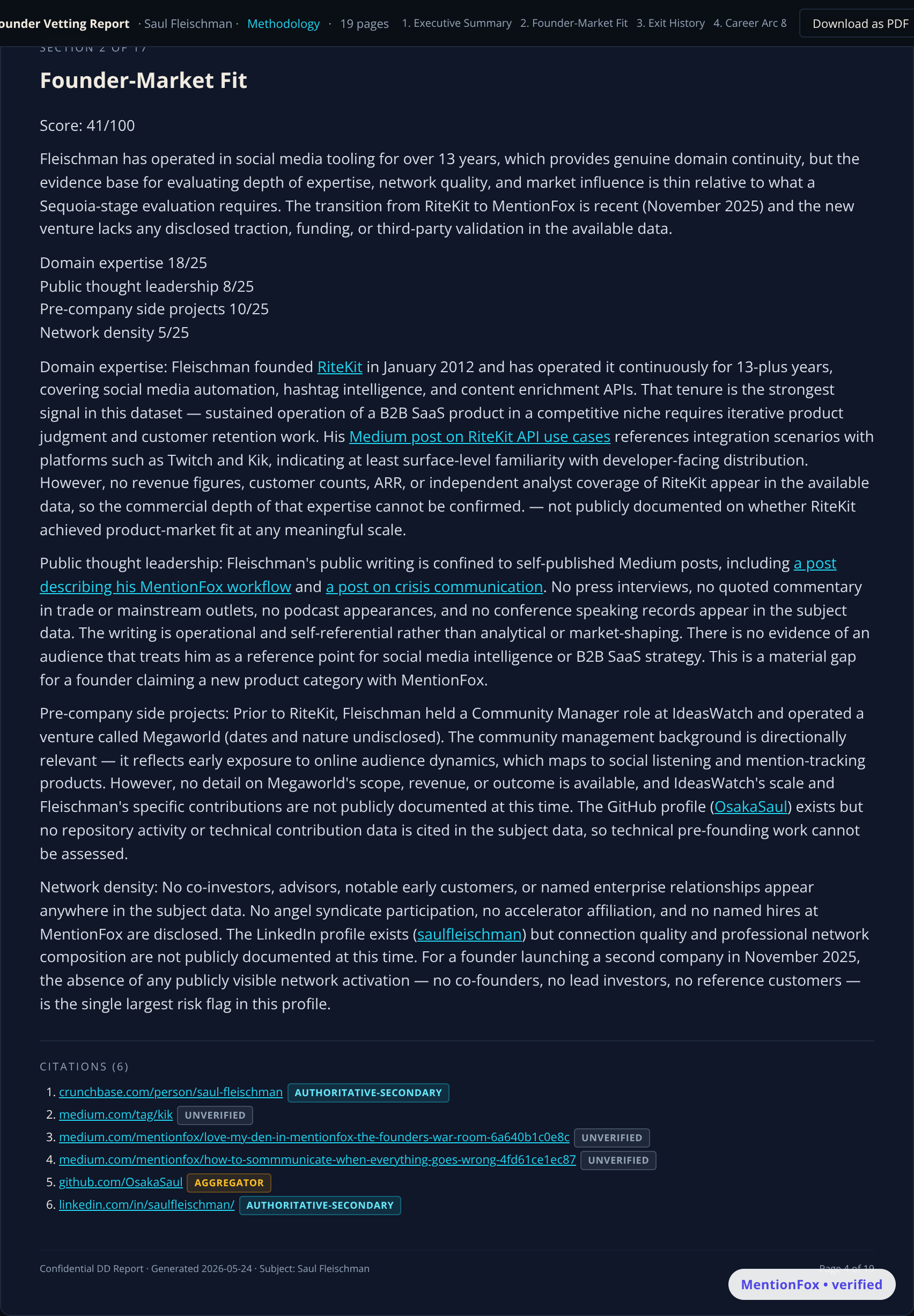
Weigh four things against each other: the program's real cohort outcomes, its terms versus the YC benchmark, your fit with its acceptance profile, and the verified value of its network for a company like yours. Compress them into a verdict that states plainly whether applying is worth the equity and the weeks.
Budget a focused day for the public-record work — outcomes, terms, portfolio pattern — and a few alumni calls for the network. Decide before you fall in love with a logo, because once a founder has decided they want in, every data point starts reading as a reason to apply.
Frequently asked questions
Is YC worth the 7% equity?
For a first-time founder without an investor network, the introductions, credibility, and standard deal can justify it. For a founder who already has access and traction, the same equity may deliver little beyond a deadline — fit and stage decide, not the brand.
How selective are top accelerators?
Very. Y Combinator's acceptance rate has long been reported in the low single digits, so an application is a real cost in founder time. Confirm you fit the program's acceptance profile before you spend weeks on a low-probability application.
How do I judge an accelerator's track record honestly?
Reconstruct the whole cohort's outcomes — graduation-to-next-round rates and quiet failures — via Crunchbase and PitchBook, and weigh NBER findings that outcomes concentrate in top programs. Do not trust the one or two breakout logos in the marketing.
What terms should I compare across accelerators?
Investment amount, equity percentage, pro-rata and follow-on rights, and any MFN clauses, benchmarked against Y Combinator's published standard deal and SAFE templates. A program taking more than the benchmark must justify it with more delivered.
How do I verify the mentor network is real?
Talk to three alumni, including one whose company struggled, and ask concretely what the program did when things went wrong. The network's value shows up in those answers, not in published testimonials.
When should a founder skip an accelerator entirely?
When you already have investor access, traction, and a network, the equity often buys little beyond a deadline. An honest vetting process must be able to conclude 'skip it, keep the equity, raise directly' — for many founders that is the right call.
Sources & evidence
- Y Combinator — the standard deal
- Y Combinator — SAFE and program documents
- Crunchbase — accelerator cohort outcomes
- PitchBook — graduation and follow-on data
- NBER — research on accelerator outcomes
- Paul Graham — essays on YC and startups
MentionFox — Evidence-backed sales intelligence and due diligence engine.
Research a person, investor, founder, or firm before the meeting: verified public-record evidence, a one-page dossier, and every claim cited.
Try MentionFox free →Cite this guide
Referencing this paper? Copy the citation below. Every claim here is sourced, so it holds up.
Referenced this in your writing? Get featured →
Add the link to your piece. We verify that your page links back here, then queue it for review — no account needed. Approved reports appear in the Featured Field Reports on the matching hub.